5 Best Japanese Kitchen Tools for Home Cooks — And How to Choose the Right One

Affiliate Disclosure: This article contains affiliate links. If you buy through one of these links, JAPANIVO may earn a commission at no extra cost to you. As an Amazon Associate I earn from qualifying purchases.
If you’re buying just one Japanese kitchen tool, start with a Santoku knife.
It’s the most versatile option on this list and the one most home cooks are likely to use every day.
If you’re searching for the best Japanese kitchen tools, the right choice ultimately depends on what you cook most often.
A donabe makes more sense if you love rice, soups, and one-pot dinners.
Tools like an oroshigane or suribachi bring more specialized Japanese techniques into your kitchen.
You don’t need all five.
Here’s how to choose the one you’ll actually use.
I’ve learned that the most “Japanese” tool isn’t always the most useful one.
How We Chose These Japanese Kitchen Tools
We evaluated these tools based on everyday usefulness, Japanese design and craftsmanship, ease of maintenance, value for money, and availability for U.S. shoppers.
We also prioritized tools that offer something meaningfully different from what most American home cooks already have in their kitchens.
Our picks are based on editorial research, product specifications, manufacturer information, and current U.S. availability.
We do not claim hands-on testing unless explicitly stated.
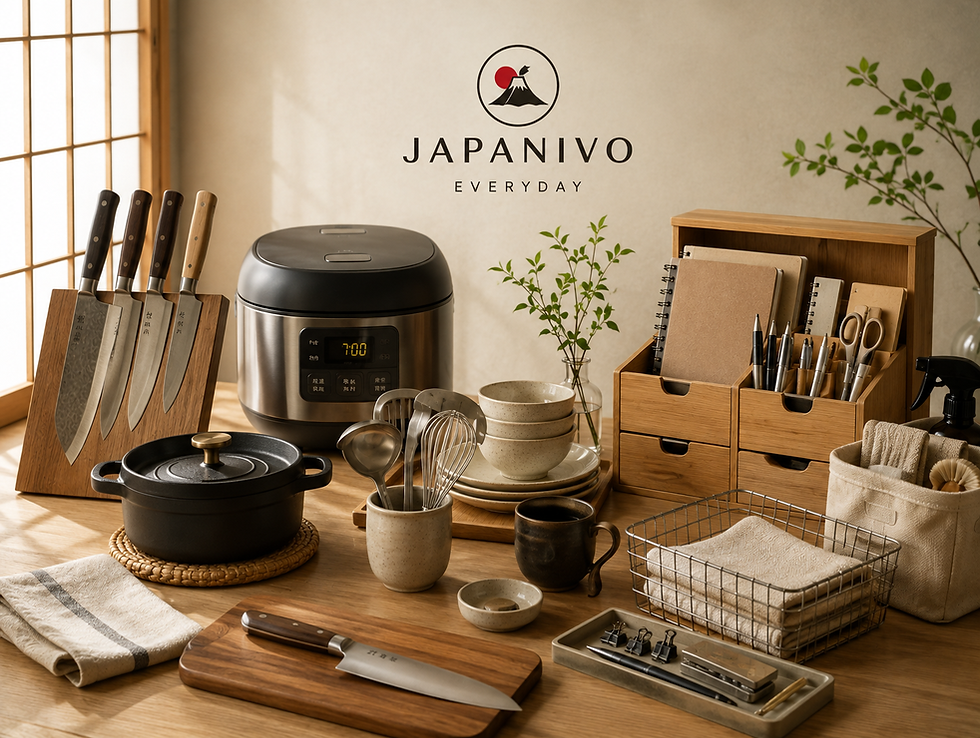
Quick Comparison: Which Japanese Kitchen Tool Is Right for You?
Not sure where to start?
Compare these five Japanese kitchen tools by price, everyday usefulness, and what each one does best.
Prices are typical ranges and may vary by maker, size, and material.
Tool | Best For |
Santoku Knife ⭐Best Overall | Everyday prep |
Tamagoyaki Pan | Omelets & bento |
Donabe | Rice & one-pot meals |
Oroshigane | Fine grating |
Suribachi & Surikogi | Grinding & sauces |
Our quick pick: If you’re buying just one, start with a Santoku knife.
It’s the most versatile choice for everyday cooking.
Choose a donabe if you love rice, soups, and shared meals.
Choose a tamagoyaki pan if you make Japanese breakfasts or bento.
An oroshigane is best for finely grated ingredients, while a suribachi & surikogi is ideal for sauces, sesame, and spices.
01 / SANTOKU
Santoku Knife
Best Japanese Knife for Everyday Cooking
If you only buy one Japanese kitchen tool, I’d start here.
Santoku roughly translates to “three virtues.”
It’s commonly associated with cutting meat, fish, and vegetables.
That makes sense in an American kitchen.
A typical Santoku has a blade around 6.5 to 7 inches long. That’s shorter than the common 8-inch Western chef’s knife.
And you’ll notice the difference.
The blade feels compact when you’re chopping onions or slicing chicken breasts.
You get plenty of cutting edge without the extra length of a large chef’s knife.
Japanese makers such as Tojiro, MAC, Global, Shun, and Misono offer Santoku-style knives across different price ranges.
Some use steels such as VG-10, while others use proprietary stainless alloys or carbon steel.
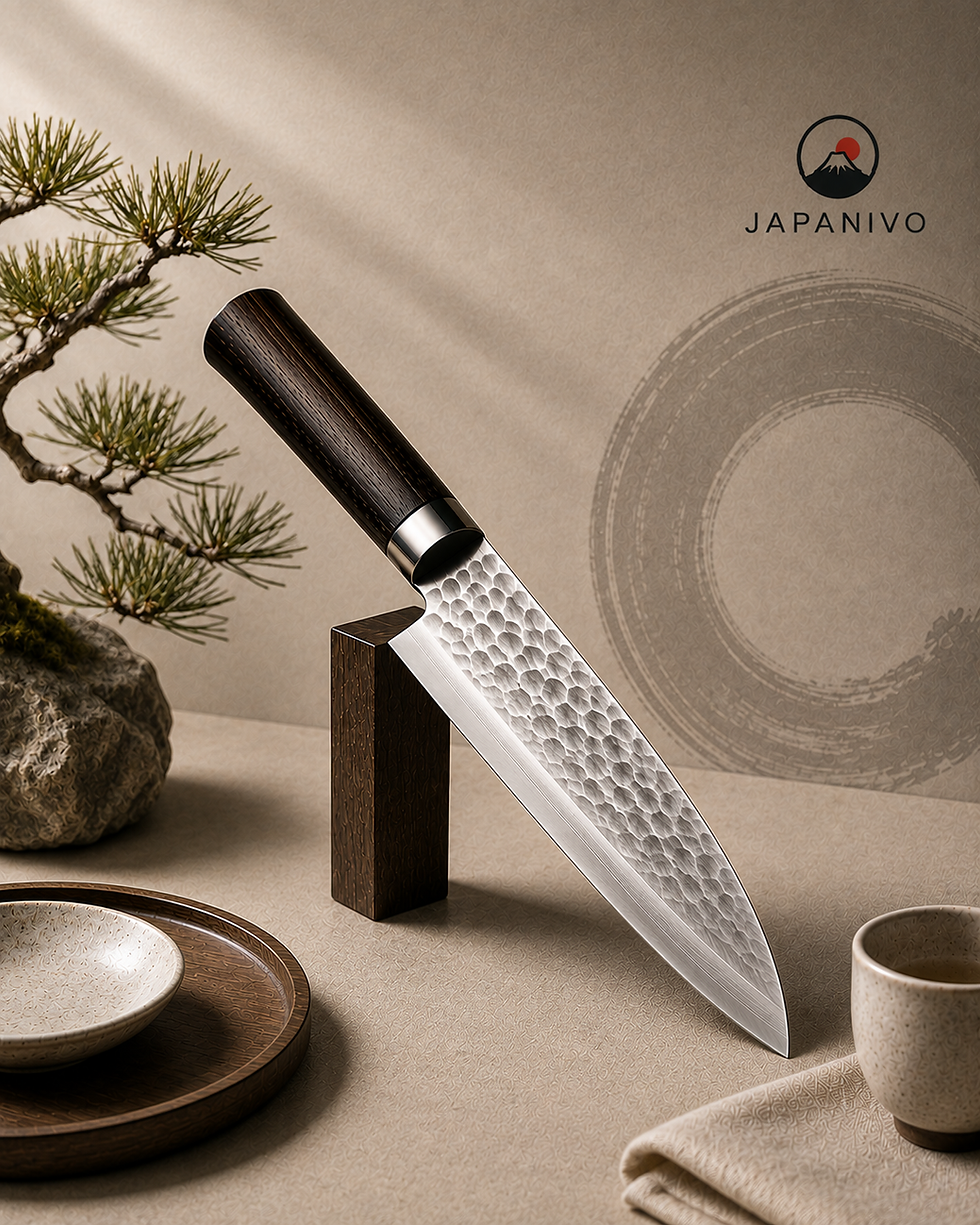
What It Feels Like in the Kitchen
Picture Tuesday night.
You’ve got a bell pepper, half an onion, mushrooms, and two chicken breasts sitting on the cutting board.
A good Santoku handles the entire meal.
The flatter cutting profile also works well for push-cutting vegetables.
If you’re used to rocking a German chef’s knife, there’s a small adjustment.
It didn’t take me long.
Pros
✓ Versatile enough for everyday cooking
✓ Compact and easy to handle
✓ Excellent for slicing, chopping, and meal prep
✓ Wide range of Japanese-made options
Cons
– Thin edges can chip with improper use
– Not suitable for bones or frozen food
– Carbon-steel models need extra care
– Premium models can be expensive
One warning matters here.
Don’t assume harder steel means a better knife for you.
A hard Japanese edge can stay sharp for a long time, but it can be less forgiving.
If you throw knives into the sink or cut through bones, a tougher Western knife may fit your habits better.
My take: the Santoku is the least specialized tool on this list. That’s exactly why I like it.
Best for:
Home cooks who want one Japanese tool they’ll use almost every day.
Typical budget:
$70–$200
What to look for:
A 6.5–7-inch blade, comfortable handle, and steel you’re willing to maintain.
I’d spend more on the knife than the other four tools.
02 / TAMAGOYAKI
Tamagoyaki Pan
Best Japanese Pan for Eggs and Bento
A Tamagoyaki pan looks strange the first time you see one.
It’s rectangular.
That shape has a purpose.
Tamagoyaki is made by cooking thin layers of seasoned egg and rolling them into a compact rectangular omelet.
A round skillet can do it.
But the square corners of a dedicated pan make shaping the egg easier.
Japanese manufacturers produce these pans in several materials.
You’ll find affordable nonstick aluminum models, iron pans, and traditional copper versions.
Copper costs more.
It also responds to heat fast.
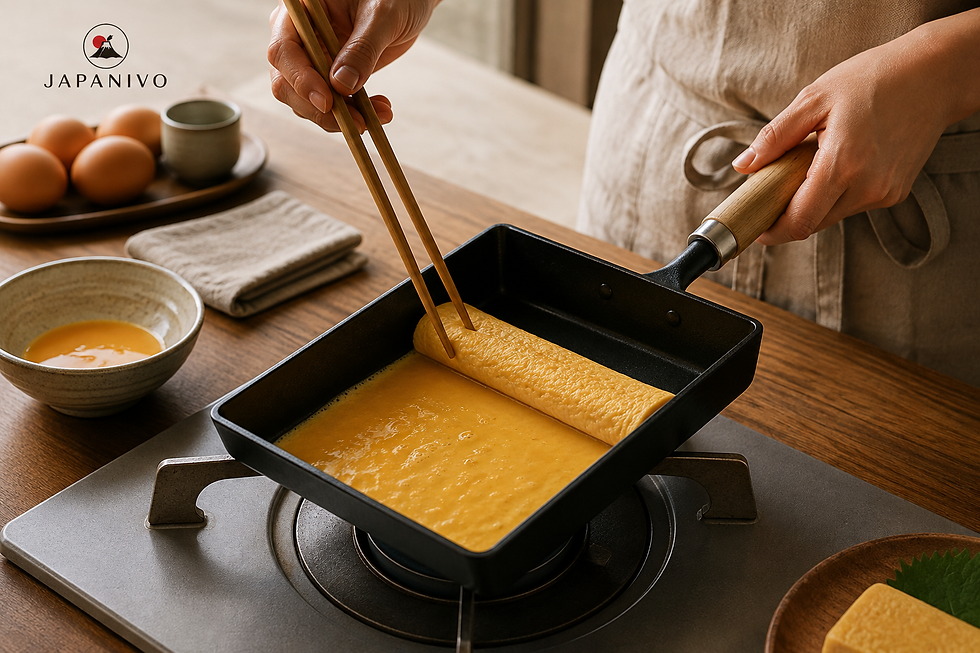
What It Feels Like in the Kitchen
You pour a thin layer of egg into the pan.
It sets.
You roll it toward one end, add another layer, and repeat.
After several layers, you’ve got a soft rectangular omelet that can be sliced into clean pieces for breakfast or a bento box.
It’s satisfying.
But there’s an obvious limitation.
This is a specialized pan.
Pros
✓ Makes rolled omelets easier
✓ Great for breakfast and bento
✓ Nonstick options are beginner-friendly
Cons
— Less versatile than a Santoku
— Iron models require extra care
— Small size limits larger meals
I wouldn’t recommend buying an expensive copper pan first.
Try a basic Japanese Tamagoyaki pan around $25–$40.
See how often you make rolled eggs.
Then upgrade.
My take: this is fun, but it’s too specialized for most first-time buyers.
Best for:
Anyone making Japanese breakfasts, bento, or egg dishes several times a week.
Typical budget:
$25–$80
What to look for:
Nonstick for convenience, iron for durability, or copper for traditional heat control.
Mine wouldn’t earn much cabinet space without weekend breakfasts.
03 / DONABE
Donabe
Best Japanese Clay Pot for Hot Pot
A donabe is a traditional Japanese clay pot.
And unlike some specialized Japanese cookware,
it can change how dinner feels.
Popular Japanese makers include Nagatani-en, known for Iga-yaki pottery, and Ginpo, whose donabe cookware is widely recognized in Japan.
Prices can start around $70 and climb well beyond $150,
depending on size and craftsmanship.
A donabe is heavy.
A medium model can weigh several pounds before you add food.
But that thick clay body is part of the appeal.
It holds heat well.
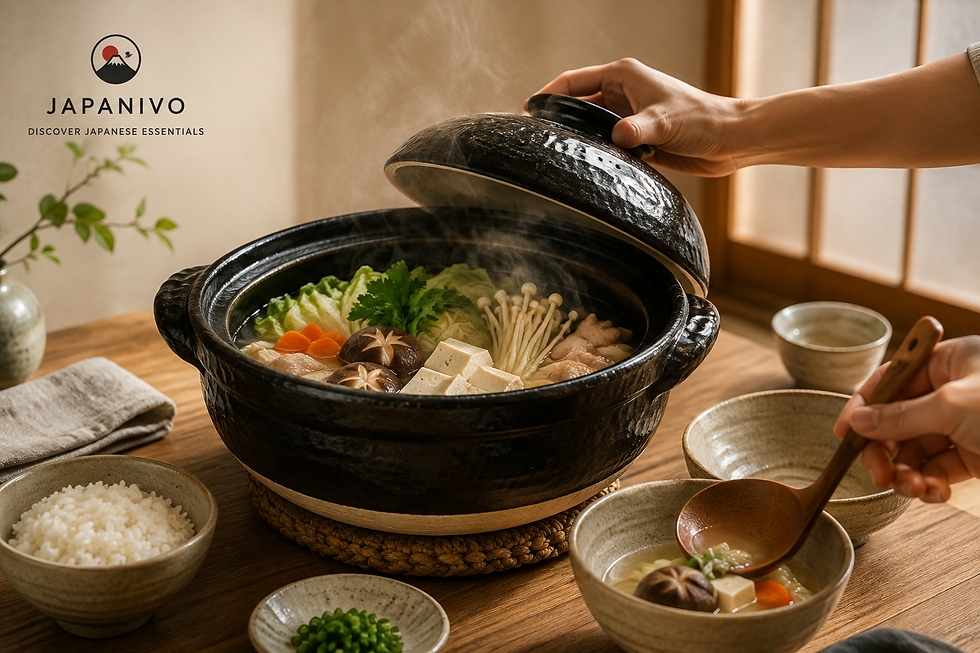
What It Feels Like in the Kitchen
Imagine putting a steaming donabe in the middle of your dining table.
Inside, you’ve got chicken, napa cabbage, mushrooms, tofu, and broth.
Nobody needs separate plated entrées.
You serve directly from the pot.
That makes donabe cooking feel different from using a stainless stockpot.
You can also find donabe designed specifically for rice.
The clay stores heat and continues cooking after the flame changes.
With practice, you can get fluffy rice and a lightly crisped bottom.
That last part is worth trying.
Pros
✓ Great for rice and hot pot
✓ Retains heat exceptionally well
✓ Goes from cooking to serving
Cons
— Heavy and breakable
— Some require seasoning before use
— Not all models work with induction
Heat shock matters.
Don’t take a hot clay pot and expose it to cold water.
And check the manufacturer’s instructions before using your donabe on a specific cooktop.
My take: donabe cooking is wonderful, but storage is the annoying part.
Best for:
Couples and families who enjoy rice, soups, hot pots, and meals served at the table.
Typical budget:
$70–$180+
What to look for:
Japanese-made clay, correct serving capacity, and compatibility with your stove.
This is the tool I’d buy for the experience, not convenience.
04 / OROSHIGANE
Oroshigane
Best Japanese Grater for Daikon and Ginger
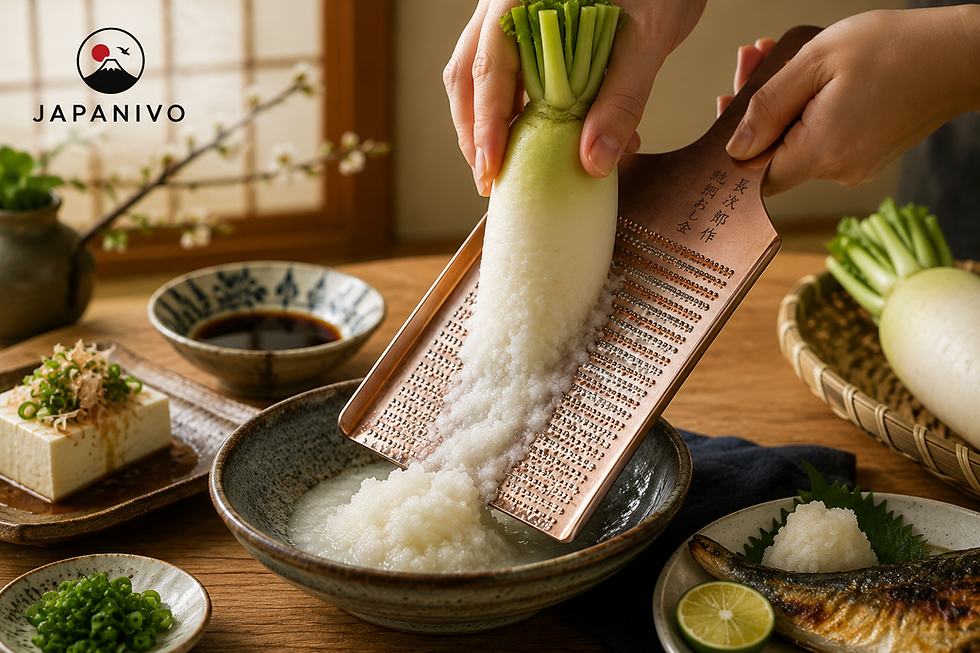
An oroshigane is a Japanese grater.
That description undersells it.
Traditional versions can be made from copper,
while modern versions often use stainless steel or aluminum.
The surface is covered with raised teeth rather than the punched holes you’ll see on many American box graters.
That changes the texture.
Instead of producing long shredded pieces, an oroshigane can turn ingredients into a fine pulp.
What It Feels Like in the Kitchen
Take a piece of fresh ginger.
Rub it across the grater.
Within seconds, you’ve got a soft ginger paste ready for soy-based sauces, dressings, marinades, or noodles.
Try the same thing with daikon.
You get the fine grated texture used alongside dishes such as grilled fish, soba, and tempura.
It’s simple.
And unlike a donabe, you don’t need to find another cabinet for it.
Pros
✓ Excellent for ginger and daikon
✓ Creates a fine, delicate texture
✓ Small and easy to store
Cons
— Less versatile than a box grater
— Sharp teeth can be tricky to clean
— Small models struggle with large daikon
Be careful with your fingertips.
Those teeth work on ginger for a reason.
My take: this may offer the best usefulness-to-storage ratio on the entire list.
Best for:
Cooks who already make Japanese sauces, noodles, fish, or dishes using fresh ginger.
Typical budget:
$20–$70
What to look for:
Stainless steel for easy care or copper if you want a traditional version.
Small tools usually have to earn their drawer space. This one can.
05 / SURIBACHI
Suribachi & Surikogi
Best Japanese Mortar and Pestle
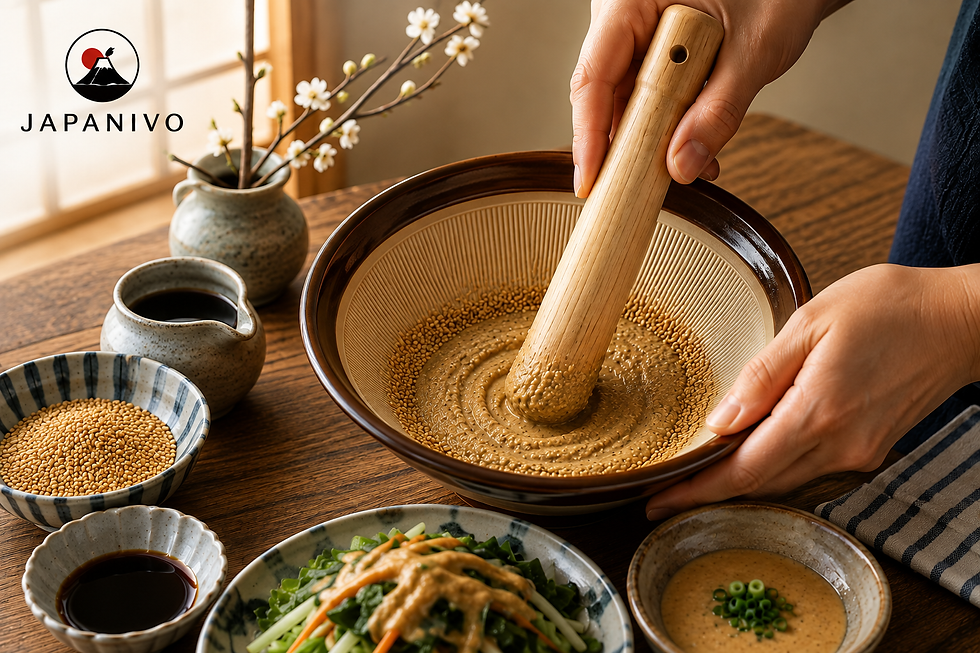
A suribachi is a Japanese grinding bowl.
The matching wooden pestle is called a surikogi.
Look inside the bowl and you’ll see the important part.
The interior isn’t smooth.
It has ridges called kushi-no-me, which help crush and grind ingredients as you move the wooden pestle around the bowl.
That makes it different from a standard smooth mortar.
What It Feels Like in the Kitchen
Add toasted sesame seeds.
Start grinding.
The seeds break apart against the ceramic ridges, and the aroma becomes stronger as their oils release.
Then add soy sauce, sugar, miso, or other ingredients.
You can build a dressing directly in the bowl.
It’s slower than pushing a button on a food processor.
I think that’s fine.
Pros
✓ Great for sesame, spices, and pastes
✓ Textured grooves make grinding easier
✓ Doubles as a mixing or serving bowl
Cons
— Slower than an electric grinder
— Ceramic can break if dropped
— Grooves take extra effort to clean
Don’t attack the bowl with the pestle.
The technique is more about grinding against the ridges than pounding ingredients straight down.
My take: I like a suribachi for sesame-based cooking, but I wouldn’t buy one just to replace a food processor.
Best for:
Anyone who makes goma-ae, sesame dressing, miso sauces, or Japanese vegetable dishes.
Typical budget:
$25–$80
What to look for:
Deep interior ridges, a stable base, and a bowl large enough for mixing.
The smell of freshly ground sesame makes the extra work easier to justify.
Which Japanese Kitchen Tool Should You Buy?
For most home cooks: Start with a Santoku knife.
For Japanese breakfasts and bento: Choose a tamagoyaki pan.
For hot pot and shared meals: Go with a donabe.
For daikon, ginger, and condiments: An oroshigane is the easiest small upgrade.
For sesame, sauces, and traditional grinding: Choose a suribachi and surikogi.
You don’t need all five. Start with the tool that fits the way you already cook, then build your Japanese kitchen from there.
Don’t choose based on which tool looks most traditional.
Choose based on Tuesday night.
What are you actually going to cook?
If You Want One Tool for Almost Everything: Santoku Knife
Start with the Santoku.
You can use it for onions at lunch, chicken at dinner, and herbs tomorrow morning.
A quality 6.5–7-inch Santoku around $100–$150
is a sensible starting point for many serious home cooks.
Best overall choice: Santoku Knife
If You Love Japanese Breakfasts: Tamagoyaki Pan
Buy the Tamagoyaki pan if rolled eggs already appear in your cooking routine.
Don’t buy it because you plan to start someday.
That’s how specialized pans end up untouched.
Best specialized choice: Tamagoyaki Pan
If Dinner Is Something You Share: Donabe
Choose a donabe if you enjoy hot pot, rice, soups, and communal dinners.
It’s especially appealing for two to four people.
Just check the size before ordering.
Best for shared meals: Donabe
If You Want Something Small and Affordable: Oroshigane
Start with an oroshigane if you’re curious about Japanese cooking but don’t want another pan.
You’ll spend roughly $20–$40
for many practical stainless-steel options.
And it fits in a drawer.
Best value for limited space: Oroshigane
If You Love Sesame and Homemade Sauces: Suribachi
Get a suribachi and surikogi
if you make sauces and dressings from scratch.
It gives you texture control
that an electric appliance doesn’t.
But it requires more work.
Best for sauces: Suribachi & Surikogi
For most American kitchens, I’d buy the Santoku first and build from there.
FAQ: Japanese Kitchen Tools
What Japanese kitchen tools should a beginner buy?
Start with a Santoku knife if you need an everyday tool.
A typical 6.5–7-inch Santoku can handle vegetables, boneless meat, fish, and herbs.
Brands such as Tojiro, MAC, Global, and Misono offer options at different prices.
If you already own a knife you love,
consider an oroshigane next.
It’s cheaper, smaller, and introduces a Japanese preparation technique without changing your entire kitchen setup.
You don’t need a drawer full of Japanese tools to start.
Are Japanese kitchen tools worth the money?
They can be, but only when the design
solves a problem you actually have.
A $120 Santoku that gets used five nights a week
can be easy to justify.
A $100 donabe makes less sense
if you never cook rice, soups, or hot pot.
Japanese-made also doesn’t automatically mean
better for every cook.
Materials, craftsmanship, maintenance,
and intended use matter more than
the country name printed on the box.
I’d rather own three tools I use than ten I admire.
What’s the most useful Japanese kitchen tool?
For most home cooks, it’s a Santoku knife.
It handles the broadest range of everyday tasks
and doesn’t require you to learn an entirely new recipe.
For cooks who already own good knives,
the answer changes.
An oroshigane is excellent for ginger and daikon.
A donabe makes more sense
for rice and hot-pot fans.
And a Tamagoyaki pan earns its place
if Japanese-style eggs are already part of your routine.
So start with your cooking habits.
Then choose the tool.
That rule has saved me from plenty of unnecessary kitchen gear.
Final Verdict
The best Japanese kitchen tools aren’t necessarily
the most expensive or traditional ones.
They’re the ones that match how you cook.
For most people, I’d rank the Santoku knife first
because it can become an everyday tool.
The oroshigane is the easiest low-cost addition.
And the donabe is the most interesting choice
if cooking and eating together are part of the experience.
The Tamagoyaki pan and suribachi are more specialized.
That isn’t a weakness.
It just means you should know why you want one
before clicking Buy.
If you’re building your Japanese kitchen from scratch,
start with one good tool.
Learn how it works.
Then add the next one
when your cooking gives you a reason.
Compare the Best Japanese Kitchen Tools →
Comments